You, my dear reader, probably have an opinion on raw milk. And it is probably a negative one. Did you earn the right to that opinion, or is it an opinion that was given to you, something you just…know to be true?
My first raw milk memory was in 2019, when I chugged down a mason jar of cold, raw goat milked after a long morning of manual labor on a farm. Fast forward a few years: I milked my first cow in 2021, for a small raw milk diary near Chico. Then, in 2022, I milked my first goat while living on Whidbey Island, and drank a glass of her raw milk every day after a long days work for about 9 months.
I’ve been ‘working’ on this essay on and off since 2021, and I just have to embrace the idea that finished beats perfect, and that this Milk Essay is inevitably going to be a multi-parter. Without further adieu, Raw Milk Ryan, part one.
A raw milk Haiku
Happy Healthy Cow
Relationship with Nature
Milk as Medicine
An ex-vegetarian, milk-curious gal asked, “Isn’t pasteurization a scientifically proven method to mitigate the risk of E. coli and other food borne bacteria that’s found in raw milk?”- This question is a common one, and illustrates a deep misunderstanding: All milk starts its journey as Raw Milk, but not all Raw Milk is created equal.
Milk with high risk for E.coli and other foodborne bacteria needs to be pasteurized, because it is bad milk.
But what about Good Milk?
I recently interviewed owner and farmer Marc Duivenvoorden, on his raw dairy farm “Duivenvoorden Farms” in Cottonwood California.
Marc shared a key point that is critical to part one of this Milk essay-
“Pasteurization is an excuse to do a sloppy job”
I talked with him for over two hours, and cut it down to under an hour. If you want to educate yourself and have an earned opinion on raw milk, please watch.
Most people alive today have never been to a dairy. Most have never even been to a working farm or ranch. We do none of the sowing, and most of the reaping. If more of us went to the source of our food, whether it be meat or vegetables or dairy, the factory farming system would collapse overnight and I wouldn’t be at my desk writing on on a beautiful sunny day.
If you fall into the “never been to a farm or ranch” category, don’t fret. It’s not your fault. And if you want to change that, email me and i’ll help you out.
Before I continue, I want to be honest: The most opinionated people I talk to are those who know next to nothing, and talking with these people is absolutely exhausting. This Highly Opinionated type talks of food and farming and agriculture as if they are a multi-generational farmer or rancher, as if their life as an overpaid tech worker who has never lived outside of a city and has no idea where their food comes from, but “I took an environmental agriculture class in college and I know about Michael Pollan” gives them the right to a strong opinion. If you currently fall into the highly opinionated and under-informed category, ask yourself: What would it take for you to change your mind?
Let your guard down for a bit, and read on with an open mind. You might have some fun.
Understanding “Modern Food” is a daunting task, and it has taken me years of reading, working, listening, pondering, and thinking to get to a place where I’m comfortable forming and sharing opinion.
My goal for this project is to lay out why Good Raw Milk is great for your health, your community, and the world. This essay is just the tip of the iceberg.
More than a plea for raw milk and local food and supporting real farmers and ranchers is a plea for you to form your own opinions. Pay attention. Live mindfully. How you live your life forms the world around you. Your thoughts, actions, and feelings have ripple effects far more powerful than you can imagine. Be the change you wish to see in the world. Take responsibility for what you consume. You are what you eat.
Now back to Milk.
There’s a lot of energy around this word “Pasteurization”. Some feel that Pasteur was a hero and Pasteurization is our savior. But is that true for Milk?
“Raw milk is dangerous! Pasteurization saves lives!” is the knee-jerk response. This elicits a few followup questions:
Have you ever been to a dairy?
Did you know that around 10million people in the USA drink raw milk every year?
Did you know that from 2005 to 2020, the CDC reported zero deaths from raw milk, and 4 from pasteurized milk?
These questions are not well received, and often spiral into questioning if I am a conspiracy theorist, right wing conservative republican anti-vaccine, blah blah blah. It is equally comical, predictable, and disappointing.
What the “Raw Milk is Bad” crew lacks in facts or experience, they make up for with energy and emotion. They are programmed, operating with beliefs and talking points that have been impressed upon them. I may not be doing myself a service by being so harsh, but let me clarify: I was once where you were. I used to mindlessly and happily pour my mass-produced milk over my mass-produced cereal, without a single thought about cows or seed oils or farmer suicide rates being 3.5 times the national average ever entering my head. But those times are gone.
Here are some stats for us to think about as we read:
Roughly 1 in 25 (4%) packages of chicken at the grocery store are contaminated with Salmonella.
250million Americans eat chicken each week. 1 million outbreaks every year : 0.4% of chicken eaters get sick from chicken
CDC outbreak data for 2005-2020- Raw Milk had One reported death. One. In that same timeframe: Leafy Greens had 23, and Pasteurized Milk had 4.
Of the 15million raw milk drinkers in the USA, there is one reported death in 15 years.
How did this idea that raw milk is dangerous get so deeply entrenched?
Let’s loosen up your brain a bit with this excerpt from the British Medical Journal in June, 1938:
“There is no substitute for clean, raw milk as a food, so far as children are concerned. Science has not yet succeeded in providing, in the pasteurized variety, those essential qualities that are the only real foundation for a healthy child.
Unfortunately, many grossly distorted statements are current regarding our milk supply. If we are to believe the protagonists of the Pasteurization-of-all-milk-at-all costs Party, raw milk is as good, or rather as bad, as rat poison-although as the Minister of Agriculture recently stated, “the human race existed long before Pasteur was heard of.”
The process of pasteurization was debated in the House of Commons and the suggestion made that no raw milk should be sold for human consumption. This would mean installation of expensive machinery by every supplier, and if it should become compulsory there is little doubt that many small firms would shut down and the business pass in the hands of a few big dealers.
If we are to be compelled to drink pasteurized milk, we should at least understand what pasteurization means. It set out to accomplish two things: Destruction of certain disease-carrying germs and the prevention of souring milk. These results are obtained by keeping the milk at a temperature of 145 degrees to 150 degrees F. for half an hour, at least, and then reducing the temperature to not more than 55 degrees F.
It is undoubtedly beneficial to destroy dangerous germs, but pasteurization does more than this-it kills off harmless and useful germs alike, and by subjecting the milk to high temperatures, destroys some nutritious constituents.
With regards to the prevention of souring; sour raw milk is very widely used. It is given to invalids, being easily digested, laxative in its properties, and not unpleasant to take. But, after pasteurization, the lactic acid bacilli are killed. The milk, in consequence, cannot become sour and quickly decomposes, while undesirable germs multiply very quickly.
Pasteurization’s great claim to popularity is the widespread belief, fostered by its supporters, that tuberculosis in children is caused by the harmful germs found in raw milk. Scientists have examined and tested thousands of milk samples, and experiments have been carried out on hundreds of animals in regard to this problem of disease-carrying by milk. But the one vital fact that seems to have been completely missed is that it is CLEAN, raw milk that is wanted. If this can be guaranteed, no other form of food for children can, or should, be allowed to take its place.
Dirty milk, of course, is like any other form of impure food — a definite menace. But Certified Grade A Milk, produced under Government supervision and guaranteed absolutely clean, is available practically all over the country and is the dairy-farmer’s answer to the pasteurization zealots.
Recent figures published regarding the spread of tuberculosis by milk show, among other facts, that over a period of five years, during which time 70 children belonging to a special organization received a pint of raw milk daily. One case only of the disease occurred. During a similar period when pasteurized milk had been given, 14 cases were reported.
Besides destroying part of the vitamin C contained in raw milk and encouraging growth of harmful bacteria, pasteurization turns the sugar of milk, known as lactose, into beta-lactose — which is far more soluble and therefore more rapidly absorbed in the system, with the result that the child soon becomes hungry again.
Probably pasteurization’s worst offence is that it makes insoluable the major part of the calcium contained in raw milk. This frequently leads to rickets, bad teeth, and nervous troubles, for sufficient calcium content is vital to children; and with the loss of phosphorus also associated with calcium, bone and brain formation suffer serious setbacks.
Pasteurization also destroys 20 percent of the iodine present in raw milk, causes constipation and generally takes from the milk its most vital qualities.
In face of these facts-which are undeniable-what has the Pasteurization Party to say? Instead of compelling dealers to set up expensive machinery for turning raw milk into something that is definitely not what it sets out to be — a nutritious, health giving food — let them pass legislation making the dairy-farmers produce clean, raw milk — that is milk pure to drink with all its constituents unaltered.”
Let’s break down a few of these points:
“This would mean installation of expensive machinery by every supplier, and if it should become compulsory there is little doubt that many small firms would shut down and the business pass in the hands of a few big dealers.“
John D. Rockefeller’s dairy investments included Borden’s Condensed Milk Company, Chicago Milk Shed, Moffat Dairy Company, Sheffield Farms Dairy Company, and Armour & Company dairy business. Do you want to guess who lobbied against for pasteurization in the early 1900s?
In happy news, one of his descendants opened up her own raw milk dairy on the east coast. The pendulum swings back, as the massive Rockefeller fortune that was made in part by bankrupting small farms is used to start a small farm. For the sake of preserving my journalistic integrity: I am not certain that this heir received inheritance money from her late grandfather . Either way- The pendulum is swinging back.
This method of using fear to make rules that cripple the small businesses is common practice in many industries in the USA, from Electronic Logging Devices on shipping trucks to equipment for processing meat and dairy. Lobbying is terrible and we should not be allowing this in our government. Left or Right, Conservative or Liberal: We are all victims of lobbying.
Back to the Milk: Pasteurization kills bacteria, both good and bad. Raw Milk isn’t bad. Bad Raw Milk is bad.
The Milk that was being produced en-masse to feed the massively growing populations in cities all across the United States in the late 19th and early 20th century most certainly carried significant health risks. Most of that milk was bad milk.
Pasteurized Milk become normalized because dairies producing bad milk became normalized.
Here’s a bit of history about this bad milk, “Swill Milk”:
“As people left their family-owned farms and acreage for the cities, ie urbanization, a new market emerged. Now there were more densely-populated markets to provide for, where mass amounts of milk needed to be supplied. Big business readily took to this emerging market.
Many concentrated farming operations were born to capitalize on this opportunity. Collaboration being older than business itself, some of these milk farmers began feeding their cows spent grains from alcohol distilleries, virtually eliminating feed costs.
Spent brewing grains, especially in bulk, are a long deviation from the animal’s natural diet and had a negative effect on their health. This reduced the quality of their milk, horrifically. The resulting milk was blueish in color and transparent compared to the butter-yellowed white milk produced by healthy cows, this blueish low quality milk became known as “swill milk.”
Adding insult to injury, the people in charge of these operations decided to cover up the visual indicators of their poor milk quality instead of making it right. They did this by adding gypsum powder (plaster of Paris, basically chalk) to whiten the milk, starch and eggs to thicken it up, and molasses to replace what would’ve been the buttery hue.”
100 years later we’ve got giant cities, with big dairies producing quantity over quality, and people who have grown up with the normalization of pasteurization. The big dairies produce bad milk then pasteurize, homogenize, and sterilize it, and the city-slickers have no idea how good real milk is.
“Milk should be pasteurized!”, the well trained sheep all Baaaaa in unison. The programming from the propaganda of the early 1900s is still going strong.
Can you imagine a dairy farmer trying to get his milk from a farm to a city without refrigeration and a car? The dairies tried to follow people into cities, which led to swill milk, which led to pasteurization.
The Milk of these booming cities when Pasteurization was on the rise did not have the benefit of Stainless Steel and Refrigeration. We do.
Modern cleaning and cooling technology allows us to easily clean a cow’s teet and milk it, transport it in anti-bacterial stainless steel pipes, through a filter, into a stainless steel tank that automatically churns the milk with a cooling mechanism to drop it to below 40 fahrenheit, continuously monitor and regulate the temperature, easily test it for even the slightest trace of harmful pathogens, bottle it, and then put it straight into a cooler truck.
Stainless steel and refrigeration technology have saved more lives than modern medicine. To act as if milk in 2026 poses the same health risks as milk in the 1900s is
For a deeper dive into this bold statement, join my book club as we read Dissolving Illusions, which tracks the decline in mortality from infectious diseases in the 20th century, and shows this decrease was primarily due to improvements in sanitation, indoor plumbing, nutrition, and hygiene.
With modern cleaning and cooling technology, you can easily clean a cow’s teet and milk it, pass it through anti-bacterial stainless steel pipes into a stainless steel tank that automatically churns the milk with a cooling mechanism to drop it to below 40 fahrenheit, continuously monitor and regulate the temperature, bottle it, and then put it straight into a cooler truck.
HERE”S A LINK TO MARC TALKING ABOUT HOW THIS IS DONE!
Before we continue with cows- let’s take a quick detour and talk about Almond Milk. Almond “milk” is terrible for the environment and probably not great for your health.
California’s almond industry consumes ~1.3 trillion gallons of water annually, which is roughly 8x more than the entire u.s. data center footprint.
If you don’t know this already, you simply haven’t been paying attention. Most of us consume food mindlessly. And that’s not your fault. There’s lots going on in the world, and a lot of people spend a lot of money to keep you distracted.
A bit more Almond Milk stats-
It takes 1.1 gallons of water to grow one almond (on the low end).
1 gallon of almond milk requires 162 gallons of irrigation water.
Almonds use 10% of California’s agricultural water supply- This is not rainwater: This is water pumped from wells and aquifers.
In Contrast:
One gallon of milk requires only 8 gallons of irrigation water.
1 Gallon of Cow Milk: 8 gallons of irrigation water.
1 Gallon of Almond Milk: 162 gallons of irrigation water.
Enough with fake. Onward!
Here’s a video of me drinking some raw milk.
Researching Raw Milk is tricky, especially when we’ve covered how a lot of the “raw milk is bad” propaganda was cemented over 100 years ago.
Here’s a great example of that illustrates the trickiness: I googled “Lettuce and Raw Milk illness rates”, and Google’s “AI Overview”, the first result, says-
“Vegetables (specifically leafy greens) are associated with a higher absolute number of deaths and illnesses than raw milk, primarily due to their much higher consumption rates. However, when measured per serving, raw milk carries a significantly higher risk of foodborne illness, with a 0.007% illness rate compared to 0.69% for leafy greens”
Most of us would look at that and say “Ryan! Look! It says right here that Raw Milk is more dangerous than Leafy Greens!” and then I’d take a deep breath and ask you read that underlined part again:
“raw milk carries a significantly higher risk of foodborne illness, with a 0.007% illness rate, compared to 0.69% for leafy greens”
Is .0007% a higher risk than 0.69%?
Why and how does this become the top result?
Another Research Trickiness Story: I google “nutrient comparisons raw milk vs pasteurized” and the first link that comes up is from gonnaneedmilk.com , with the title “Raw Milk vs Pasteurized Milk”.
The site says “pasteurized milk comes with all the same benefits (and none of the risk) as raw, unpasteurized milk”, and immediately I am suspicious.
My experience in food (and life) has taught me that a sweeping statement without any data is worth questioning. Being Devil Advocate and pushing back on that stuff has given me lots of joy over the years, and you’ll learn a lot more too.
So i research this “gonnaneedmilk.com” and find out it is the website for “The National Fluid Milk Processor Promotion Board”. What a mouthful. What dos the national fluid milk processor promotion board do, you ask? Great question.
As part of the US Department of Agriculture’s Agricultural Marketing service, The National Fluid Milk Processor Promotion Board “develops and finances generic advertising programs designed to maintain and expand markets and uses for fluid milk products produced in the U.S. Processors marketing more than 3 million pounds of fluid milk per month pay a 20 cent per hundred-weight assessment on fluid milk processed and marketed in consumer-type packages in the U.S.”
Any surprise that the organization with a mouthful of a name has an even wordier description? And what does this even mean? Why does our taxpayer funded USDA have a marketing service milk?
They provide a name as the point of contact, a government employee with the title of “Agricultural Marketing Specialist”.
“In her current position, Emily is responsible for the oversight of the Fluid Milk Processor Education Program, more commonly known as MilkPEP. This program finances and develops a coordinated program of promotion and research to improve the competitive position of and to expand markets for fluid milk products in the United States. Emily also administers the Dairy Donation Program, designed to encourage eligible dairy organizations to partner with non-profit organizations and provide nutrition assistance to low-income individuals.”
Government employee salaries are public, and this “Agricultural Marketing Specialist” gets paid a whopping $145,604.00. Why does this job exist?
Another quick fun fact:
“Since the Agricultural Act of 2014, the US Government has spent anywhere from 20 to 40 billion per year for direct and indirect subsidies”
Folks- that is a lot of money. Taxpayer money. Your money.
How much of this spending is the result of lobbying? Is it possible the big dairies pumping out bad milk that needs to be pasteurized have anything to do with this? The Meat and Dairy lobbies have spent over $200 million in lobbying the past twenty years. Surely this might have some effect? This is another rabbit hole we don’t have time to go down in this essay. Stay tuned.
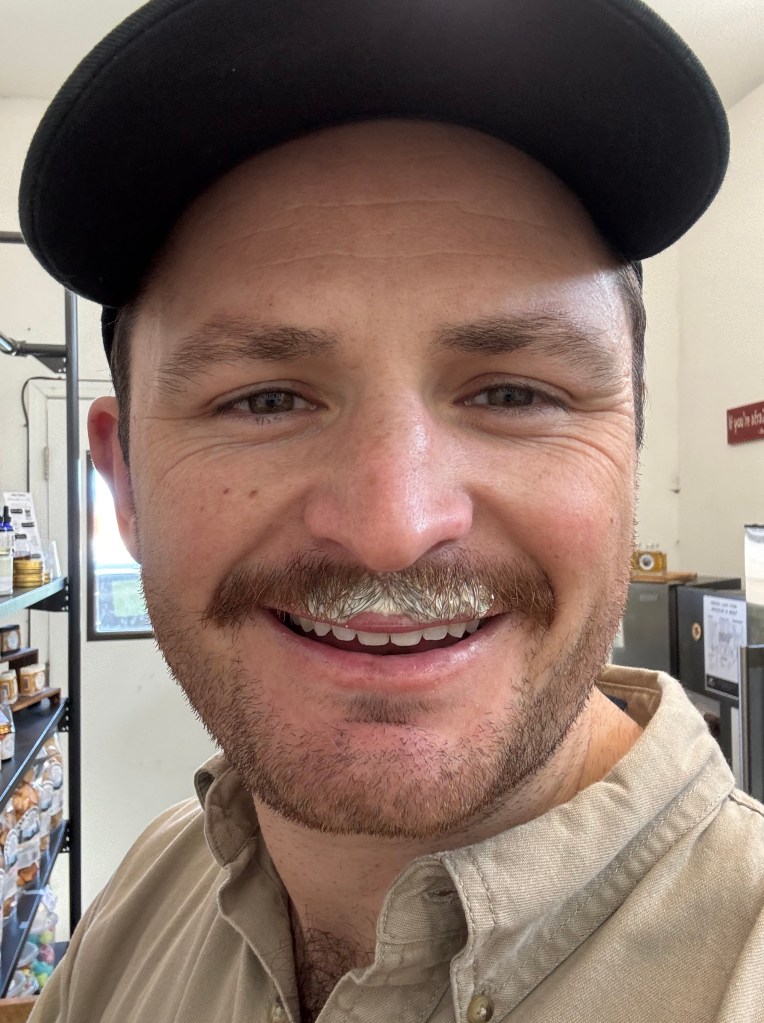
Here’s a fun selfie to break this up.
Here’s an article in the British Medical Journal in 1933, titled “In Defence of Raw Milk”
SIR,-One cannot resist a smile when one reads the innocent and well-meaning pronouncements of the medical Lords about pasteurized milk. How the commercial magnates must chuckle! The great mergers and pools that engulf the small producers wallow in their opportunity. ” Thou shalt pasteurize! “ ” What plant? What gadgets? ” ” I will tell thee: I will send a man from So-and-so’s “-” £500 -£2,000-I cannot run to it! ” ” Very well-sell! Thou askest to whom? Of course, to the great and Co.” Thus are the victims swallowed and the great and Co.,” waxes fat. The medical Lords have so much half-truth about their position that it seems impregnable. But have they given enough weight to modern knowledge? Is not their conception of the natural history of life a trifle worn thin? Do they remember to boil their milk and forget to boil their butter? I am not wanting in respect for the careful work of Dr. Savage. and such as he, though the superstructure of milk regulation which they build upon it seems wrong. We ought ‘to think again. A little learning is a dangerous thing. Let a few doubts arise. Lord Moynihan would ” boil every drop of milk that comes into his house.” That is one statement. Here is another from the milk pasteurization licence. ” The milk shall not be so heated more than once, and shall not be otherwise treated by heat.” Here is a third: nine-tenths of the milk of London is already pasteurized. What, then, shall we say of Lord Moynihan’s milk? Is it from the one-tenth which is still raw? What shall we say to the coffee milk, the rice-pudding milk, the baby’s bottle milk? All will be heated twice-once in the pasteurization, once in the home. Look at Miss – Harriett Chick’s photographs of babies fed on twice pasteurized milk in Vienna: you will find them in the Vitamin Report. Has fresh milk no protective quality? I can recall the infants of Antwerp thirty years ago brought to the stoep of the shippons in the Zoo, drinking milk warm from the cows by physician’s order. Are not eight out of nine cases *of tuberculosis due to germs of the human type?
If you can inhibit the source of the ninth’s infection by pasteurization (you cannot kill it by that means), is it worth while, seeing that: (1) you destroy the vitamin C; (2) you damage some of the others; (3) you spoil much of the milk’s value as a lime provider-and it is the main source of lime to many children; (4) you spoil its iodine activities; and the more that is known of the milk the larger the list will become.
The clean food campaign speaks too much like a maiden aunt. “Peel your apples,” ” -Peel your potatoes” (throw away the albuminoids, iron, and manganese), “Blanch your tomatoes,” ” Wash the sapid juice from your fish,’ “Steam your meat,” ” Decorticate your wheat’”: the -steel rollers hum. What machinery, what cleansing, what white flour, what pure starch! Every speck of offal removed-roughage, germ, sharps-a by-product, saleable-at a price-for the pigs. “Do not the vitamins go with them, B and E? ” ” Of course they do; but a civilized being will take a preparation of the vitamins ” (if he remember). ” What about E?” ” You can get capsules of wheat-germ oil now.” ” At what cost? ” ” Oh, 7s. 6d. for a week’s allowance.” [Haven’t you robbed the bread of that 7s. 6d. worth?] ” After all, why bother about E? ” ” Better ask that of the Eugenists.” “Well, if you like, put some germ back in the bread, provided you treat it with superheated steam.” “Why so treat it? ” “To make it keep: raw germ has a ferment that sours in three weeks.” ” Does not the thermolabile part of B suffer? ” ” Oh, well . . .” (no answer). For heaven’s sake let us get back to some live and vital food, and not be advocates any longer of eating the mere boiled cadaver. The dreadful stories of tubercle in cattle? True; but they should not be true, and need not be. A good veterinary surgeon will suspect a doubtful udder, and if acid-fast bacilli are yielded (which he can tell you the same day), that cow can be killed, or its milk boiled, at once, without waiting the result of the guinea-pig test. It is the tuberculous udder that is 90 per cent. of the real danger, which by this means can be reduced in a year or two to very small proportions.
But if you are going to pasteurize on a large scale you are going to destroy the whole incentive to produce ” healthy milk.” You will do worse! You will make milk unpopular on account of the subtle difference in the taste, and what we want is to popularize the use of at least twice as much. Price conditions the quantity used. Pasteurization puts up the price pence per gallon. The same sum would cover the cost of producing ” Grade A (T.T.) ” milk. Is anyone still nervous of that? ” Abortus? Still the possibility of tubercle? ” ” Yes, just the possibility, Mr. Microbephobia.”-I am, etc.,
Do we need to pasteurize good raw milk? Do mother’s need to pasteurize their breast milk before giving it to their baby?
How many ingredients are in your milk?
Do you know the farmers who did this? you don’t even have to know them personally- but do you know their names? have you looked them up?
Even those of you who are “organic” people- did you just buy the label cause it said t was organic and had a picture of a happy cow on it? Was that the extent of your investigation?
The reality is, most milk in a store won’t meet what the criteria should be for milk. And that’s good- let’s get this out in the open: Our food system is broken in many ways. There are many factors, but one of them is that we opted for convenience. As we moved into cities, We had better things to do than produce our own food, we had better things to do than to go out to local farms and ranches and gather our goods when they were prepared. We mindlessly shop at stores, and just assume that all of this food will magically appear. But how does it appear? Who makes it and grows it, who packages it up, how does it get there, who stocks it on the shelves, who rings up my order and asks me if i want a bag? We don’t care- our AirPods are in the whole time. We don’t hear them or see them- we’re just here to get groceries, man.
Why don’t mothers pasteurize their breast milk?
Why don’t animals pasteurize their milk?
Why do we tell Mothers not to drink or smoke when they are breastfeeding? Because the quality of milk matters!
The quality of milk depends on its source.
From NIH.gov-
“Human milk provided by healthy and well-nourished mothers is the optimal way of providing nutrients as required by biological processes associated with growth and development [1].”
and from USDA.Gov
“Almost all medicines pass into your milk in small amounts… While breastfeeding, it is important to stay drug-free. Anything that gets you high can harm your baby and can pass to your baby through your breast milk. Avoid using marijuana, crack, cocaine, heroin, ecstasy, meth, and other street drugs.”
Let’s compare mothers. Mother One has unlimited resources to be as healthy as possible. Her nutritionist crafts her the perfect diet for a breastfeeding mother. She exercises often, has low stress levels, and has a strong community. Mother Two is overweight, eats highly processed foods, never exercises, and spends her time mindlessly on social media and the like. She is stressed.
Will the quality of the milk be the same?
Which milk would you want to drink?
Now imagine two cows.
Cow One grazes on diverse and lush pasture, living as a cow should live, with access to shelter in bad weather, and the freedom to roam and enjoy the grasses.
Cow One is milked with care, intention, using a simple wood stall to milk them, a grain bucket filled with organic grains for them to munch on as a little treat as they are milked. Then the farmer puts the cow back on pasture and transfers the milk from the giant milk jug into freshly cleaned half gallon mason jars to be given to the happy customers.
Cow Two spends most of its life in a place that looks more like a factory than a farm. Surrounded by concrete. Fed formulas that are meant to maximize milk production quantity. Treating the cow not as an animal but as a resource to be drained.
Cow Two is a product of the American Industrial Factory System: Treated more like a machine than an animal, she is given whatever medicines she needs to stay alive in the monstrosity they call a “farm”, then fed a mixture of food that makes her fill up with milk to the point where she is going to explode, and milked by machines
Cow One’s Milk is a gift from god, a miracle elixir.
Cow Two’s Milk is bad milk, and must be sterilized (or “pasteurized” as they call it).
Ryan, what happens to the baby cows? Does our love of milk deprive the calf? The short answer is no. The long answer leads us down an exciting rabbit hole, which we will dive into in part two of this essay.
CLOSING REMARKS:
You can’t get something from nothing
Rome Delegated itself out of existence.
One Single Raindrop never feels responsible for the flood.
Carl Jung famously said “Men don’t have ideas. Ideas have men.”
What would it take for you to change your mind? Why do you believe what you believe? Where does your belief that Raw Milk is bad come from? Do you actually know that, or is it something that was programmed into you, forced upon you without you even knowing? Do you have that opinion, or does your opinion have you?
Either drink Good Milk, or don’t drink any milk at all. Simple as that. (And stop drinking nut milks. They are worse for the environment than data centers. And most of them are filled with extra junk. Stop it!)
This essay is part one of what will perhaps be my legacy, my Crime and Punishment, my East of Eden. If you’d like to help me on this journey- please share your thoughts, feelings, reservations, challenges. Any questions I missed and shouldn’t have? Anything I say that was wrong or didn’t make sense? Much appreciated y’all.


Here’s a map where you can find where to buy raw milk near you.
And here are a few various sources for you to do your own research
- My beef with Dairy– “Since The Agricultural Act of 2014, the US Government has spent anywhere from 20 to 40 billion per year for direct and indirect subsidies”
- Multiple research studies
- Medical Overview of Raw Milk
Lots more to come, in part two (and three, and maybe four, etc)
Lots of love,
RWH
And if you want to subscribe, here you go:

 The Mindful Meat Eater
Leave a reply to episode five: Duivenvoorden Farms raw milk – The Mindful Meat Eater Cancel reply